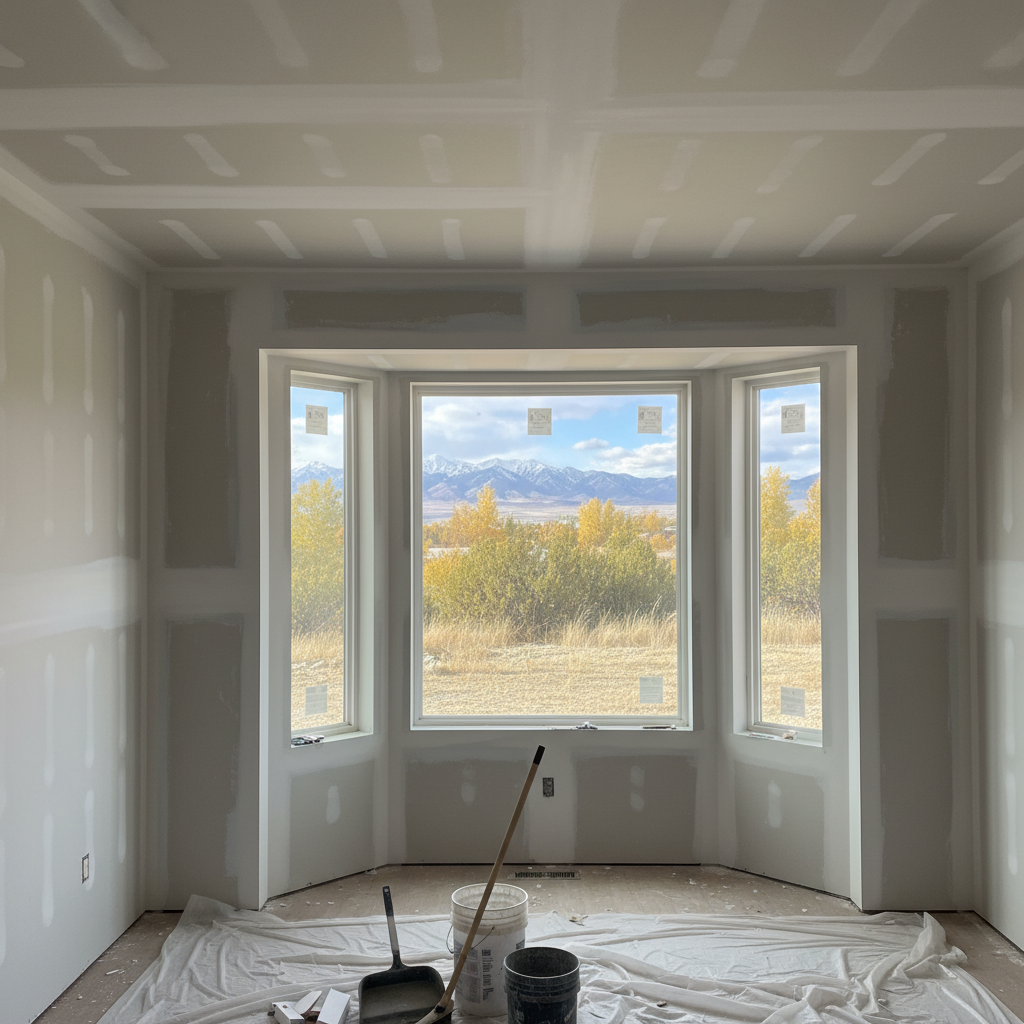
How does our local weather actually impact your sheetrock? If you live anywhere from the bench areas down toward Geneva Road, you already know Utah County experiences dramatic shifts between summer heat and freezing winter inversions. That kind of temperature swing changes how building materials behave, especially when you are hanging new drywall or patching up a basement remodel.
Timing Your Drywall Project Around Orem Seasons
Spring and fall tend to offer the most balanced indoor conditions for joint compound to cure correctly. During peak summer, the dry heat makes mud dry fast, sometimes too fast, which leads to hairline cracking if you are not careful. Winter brings its own set of hurdles with cold drafts and high humidity trapped inside unheated spaces. All Things Drywall Company helps homeowners schedule their projects around these weather patterns.
- Spring and Fall: Ideal moderate temperatures for standard curing times.
- Summer: Fast evaporation requires thin coats and careful monitoring.
- Winter: Adequate indoor heating is mandatory to prevent frozen or sluggish mud.
Protecting Your Walls Year-Round
All Things Drywall Company sees plenty of damage caused by seasonal expansion and contraction. Foundation settling in our local clay soil combined with humidity swings puts stress on seams and corners. Make sure your HVAC system runs consistently, and fix minor leaks immediately before they compromise the gypsum core.
Keeping an eye on these details saves you from unexpected repair bills down the road. Take things season by season, and your walls will stay solid for years.